Splint therapy for bruxism: how a night splint works
22.10.2026 · 6 min read
A splint is a removable overlay on the teeth made from individual impressions. Its main task is to separate the teeth and reduce the load during clenching. We explain how splint therapy works and what to expect from it.
What a splint is
A splint is a guard that fits closely on the dental arch. It is made in a laboratory or on the clinic's own equipment from impressions or a scan.
The overlay has an occlusal surface that contacts the teeth of the opposite jaw. The dentist adjusts this surface so the contacts are even.
A splint does not solve every problem. It protects the teeth and the joint while the dentist works on the cause.
The overlay is made of a hard or soft material. The choice depends on the condition of the teeth and the goal of treatment.
Thickness affects comfort. An overlay that is too thick changes the bite and makes speaking difficult. The dentist selects the optimal option.
A splint is made individually. Ready-made trays from a pharmacy do not reproduce the relief of the teeth and do not give even contact.
How it differs from an alignment tray
An aligner is a tray for moving teeth. Each next tray has a different shape and gradually moves the tooth into the required position.
A splint does not move teeth. It keeps the position and redistributes the load. The material and thickness are different too.
A splint usually does not need to be worn during the day. It is used mainly at night, when bruxism is most active.
How a splint works
During clenching the teeth contact each other with great force. The splint becomes a layer that takes this load.
- reduces the pressure force on enamel;
- protects fillings, crowns and veneers;
- lowers the load on the temporomandibular joint;
- reduces morning jaw stiffness;
- gives the dentist time to diagnose the cause.
A splint does not teach the brain not to clench the teeth. It only reduces the consequences.
The effect is not noticeable at once. In the first weeks the patient gets used to the overlay, and the contacts are still being adjusted.
The dentist assesses the marks on the splint surface. They show the zones of the greatest load.
Unloading of the joint happens gradually. A sharp reduction in clenching sometimes causes temporary discomfort.
Who splint therapy is indicated for
- enamel wear;
- chips of fillings and crowns;
- morning pain in the jaws or temples;
- grinding at night that relatives can hear;
- increased tooth sensitivity;
- preparation for prosthetics;
- treatment after the orthodontic stage.
The decision is made after an examination. One symptom does not confirm bruxism.
For children a splint is made less often and only when indicated. A change of bite in a child needs a separate approach.
Before fabrication the dentist checks the condition of the gums. Inflammation must be treated before wearing starts.
A splint does not treat caries and does not replace a filling. If there is a defect, it is closed before the overlay is made.
Patients with an increased gag reflex need time to adapt. The dentist selects a smaller design.
Fabrication stages
The first step is a consultation with a gnathologist. It costs from 1,500 UAH and includes an examination, an occlusion assessment and a plan.
Then the dentist takes impressions or scans the jaws. The overlay is made from these data.
At the fitting the dentist checks the fit, the contacts and comfort. Correction is carried out if needed.
A check-up is scheduled in 2-4 weeks. After that it is enough to come every 6 months.
The dentist names the cost of the splint after diagnostics. It depends on the design and the scope of work.
| Service | Price |
|---|---|
| Gnathologist consultation | from 1,500 UAH |
| Splint fabrication | after diagnostics |
How long to wear it
Usually the splint is worn every night. Some patients are advised by the dentist to wear it additionally during the day in a period of exacerbation.
Adaptation takes 1-2 weeks. Increased salivation or the feeling of a foreign object is possible.
If the overlay presses or the gums hurt, do not reduce the wearing time yourself. Book a correction.
When travelling, keep the splint in a container. In a suitcase without a case it deforms.
Do not wear the overlay while eating. This quickly damages the material.
If you become ill, disinfect the splint. The dentist will suggest a safe product.
Do not leave the overlay in a car or near a window. Sun and heat change the shape of the material.
If the splint accidentally moves out of place during sleep, it is not dangerous. What matters is that it does not lie under the pillow all day.
Do not use the splint as a sports mouthguard. A different design is needed for protection during play.
Splint care
- clean the overlay after every wearing;
- use a soft brush without abrasives;
- store it in a container with holes;
- do not wash it with boiling water or dry it on a radiator;
- do not bite the overlay;
- bring it to check-ups.
A damaged splint is not used. A crack changes the distribution of the load.
The splint and professional hygiene
The splint covers the tooth surface for the night. Under it the environment is warmer and more humid, so plaque forms more actively. Without cleaning this speeds up gum inflammation.
Before bed brush your teeth and the overlay. In the morning rinse the splint and dry it. Morning tooth brushing remains mandatory.
Professional hygiene is done more often while wearing a splint. The dentist will suggest an interval based on the condition of the gums.
If the overlay starts to smell, do not mask it with mouthwash. The smell means that plaque remains on the surface. The dentist may suggest a cleaning product.
Do not use hot water for the splint. It deforms the material and the fit is disturbed.
A check-up every 6 months includes checking the overlay. A worn or cracked restoration is replaced.
When a splint does not help
It happens that the cause of pain is not clenching. Then occlusion correction, orthodontic treatment or work on the joint is needed.
If joint pain increases, the dentist changes the plan. Sometimes a consultation with a related specialist is needed.
Breathing problems during sleep need a separate examination. A splint does not treat them.
More about the causes and symptoms - in the article bruxism: symptoms and treatment. About joint pain - in the material jaw pain and clicking. General prices - on the prices page.
Splint fabrication - on the bruxism splint page. Bite diagnostics are performed by gnathology.
Need a consultation?
Sorridi Irpin doctors will examine you and give personal recommendations. The booking form is below.
Frequently asked questions
Does a splint straighten teeth?
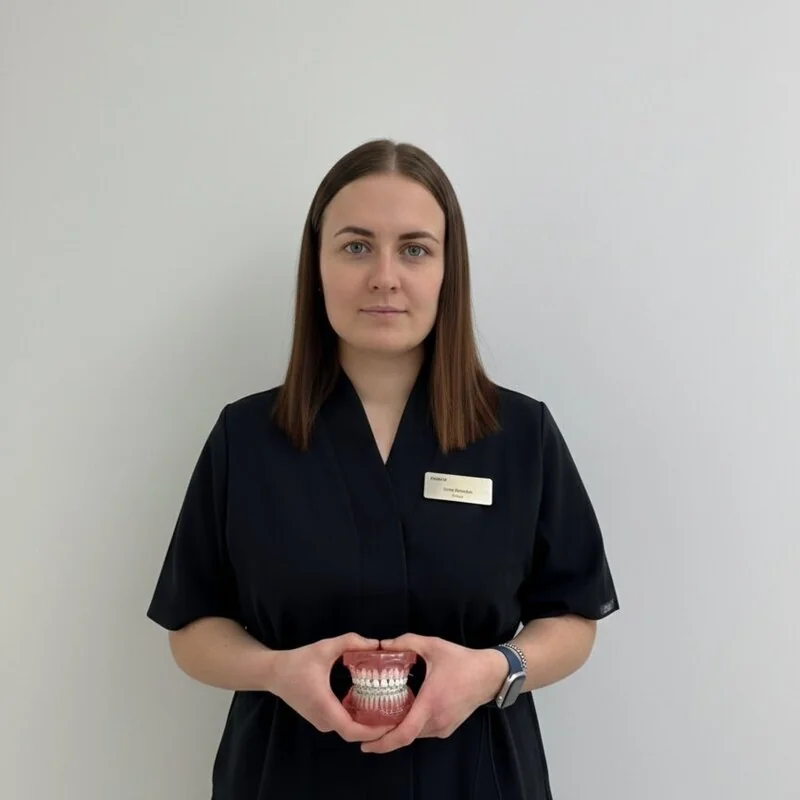
Yuliia Kunets
Orthodontist
No. A splint does not move teeth, it protects them and redistributes the load. Braces or aligners are needed for alignment.
How much does a splint cost?
Yuliia Kunets
Orthodontist
The cost depends on the design and the scope of work. The dentist names the sum after diagnostics. A gnathologist consultation costs from 1,500 UAH.
Can I sleep with a splint all night?
Yuliia Kunets
Orthodontist
Yes, that is its main purpose. Adaptation takes 1-2 weeks. The discomfort passes after correction.
Does a splint harm the teeth?
Yuliia Kunets
Orthodontist
An individual overlay made from impressions does not cause harm. Hygiene and check-ups are needed.
Does a splint cure bruxism completely?
Yuliia Kunets
Orthodontist
No. It reduces the consequences for the teeth and the joint. The dentist assesses the cause separately.
Related services
We Are Nearby
-
Cities & communities:
Irpin (city center, Snihurivka, residential areas), Bucha, Hostomel, Vorzel, Kotsiubynske, Boyarka
-
Residential complexes nearby:
Synegriya residential complex and new developments in Irpin and Bucha
-
Streets nearby:
Olhy Kobylianskoi St., Soborna St., Kyivska St., Universytetska St., Kyiv Highway
-
Landmarks:
Irpin city center, Irpin railway station, Irpin community, Bucha community